Case Study: An Audience-First Approach That Transformed Acquisition Results

The Challenge

A national service organization was mailing broadly — and paying for it. Rising costs meant they couldn’t afford to guess who might respond. They needed a smarter, audience-first way to focus their budget on people who were actually likely to join their mission.

What VeraData Did

  • Built a predictive audience model using a $10 minimum gift history to determine which prospects were most likely to respond.
  • Delivered 15,000 ranked names, prioritized from high potential to unlikely to respond.
  • Mailed these audiences in two acquisition drops.

What We Learned (The Audience Story)

Audience-first targeting pays off. The names predicted to respond rose to the top in both mailings, and the lowest-ranked prospects made almost no impact — a clear split between strong and weak audiences.

DonorVision Insight
DonorVision names responded above average, but their gifts were smaller. This signals opportunities to refine donor quality and elevate higher-value prospects.

Cost-Saving Insight
Simply removing low-potential names unlocks real money. Even with the same creative and package, focusing on stronger audiences would have significantly improved results.

Results That Matter

First Mailing:

  • High-potential donors responded more than 4x higher than the lowest group.
  • Audience-first targeting delivered:
    • 18% higher response rate
    • 29% improvement in net revenue performance vs. baseline mailing.

Second Mailing:

  • Stronger prospects again responded far better.
  • Optimization delivered:
    • 11% higher response rate
    • 19% improvement in net revenue performance vs. baseline mailing.

What This Means for Fundraisers

Acquisition works best when it starts with the right people. Focusing on the strongest audiences delivers the biggest gains.

With a thoughtful audience strategy:

  • You waste fewer dollars.
  • You elevate donor quality.
  • You build a stronger file.
  • You get results that feel like a performance upgrade, not a budget increase.

What Comes Next

VeraData’s Donor Science team will:

  • Rebuild the model with a $15 minimum gift level.
  • Build a High Dollar Model for higher-value ask strategies.
  • Continue optimizing by removing the lowest-performing groups.

New Year, New Perspective: How Donor Profiles Can Redefine Your Success

As the calendar resets, so do our ambitions. For nonprofits, a new year often brings renewed focus on growth—more donors, more gifts, more campaigns. But what if true success isn’t only about “more”? What if the real key lies in understanding the donors you already have?


This year, it’s time to move beyond surface-level metrics like total dollars raised or donor counts. By using Donor Profile Reports, organizations can gain a deeper, more strategic perspective on their donor base—one that reveals not just how much donors give, but who they are and why they give.


Moving Beyond the Numbers

Traditional fundraising metrics can be misleading when viewed in isolation. Year-over-year revenue growth might look impressive, but it doesn’t tell you who is driving that success or whether it’s sustainable. Are your high-value donors aging out of your campaigns? Are new donors sharing the same motivations and values as your loyal supporters?


This is where Donor Profile Reports make a difference. These reports analyze both the demographic (age, income, education, geography) and psychographic (interests, beliefs, lifestyle) composition of a donor segment. By comparing this segment to a baseline population, such as the general U.S. population or another donor file, organizations can see exactly what sets their supporters apart.


The reports calculate counts and percentages for each attribute, then create ratios that highlight meaningful differences. The result? A clear, data-driven picture of your donor community’s unique characteristics.


Seeing What Truly Drives Impact

Understanding donor composition reframes how you define success. For example, suppose your most loyal donors share strong values around community involvement and social responsibility. That insight doesn’t just inform future messaging—it reveals what connects your mission to your donors’ identities.


Similarly, identifying key psychographic traits can help tailor campaigns that speak directly to donor motivations. Instead of relying solely on transactional metrics like donation size, you begin to measure relational strength—the long-term potential built on shared purpose and emotional connection.


Redefining Strategy Through Insight

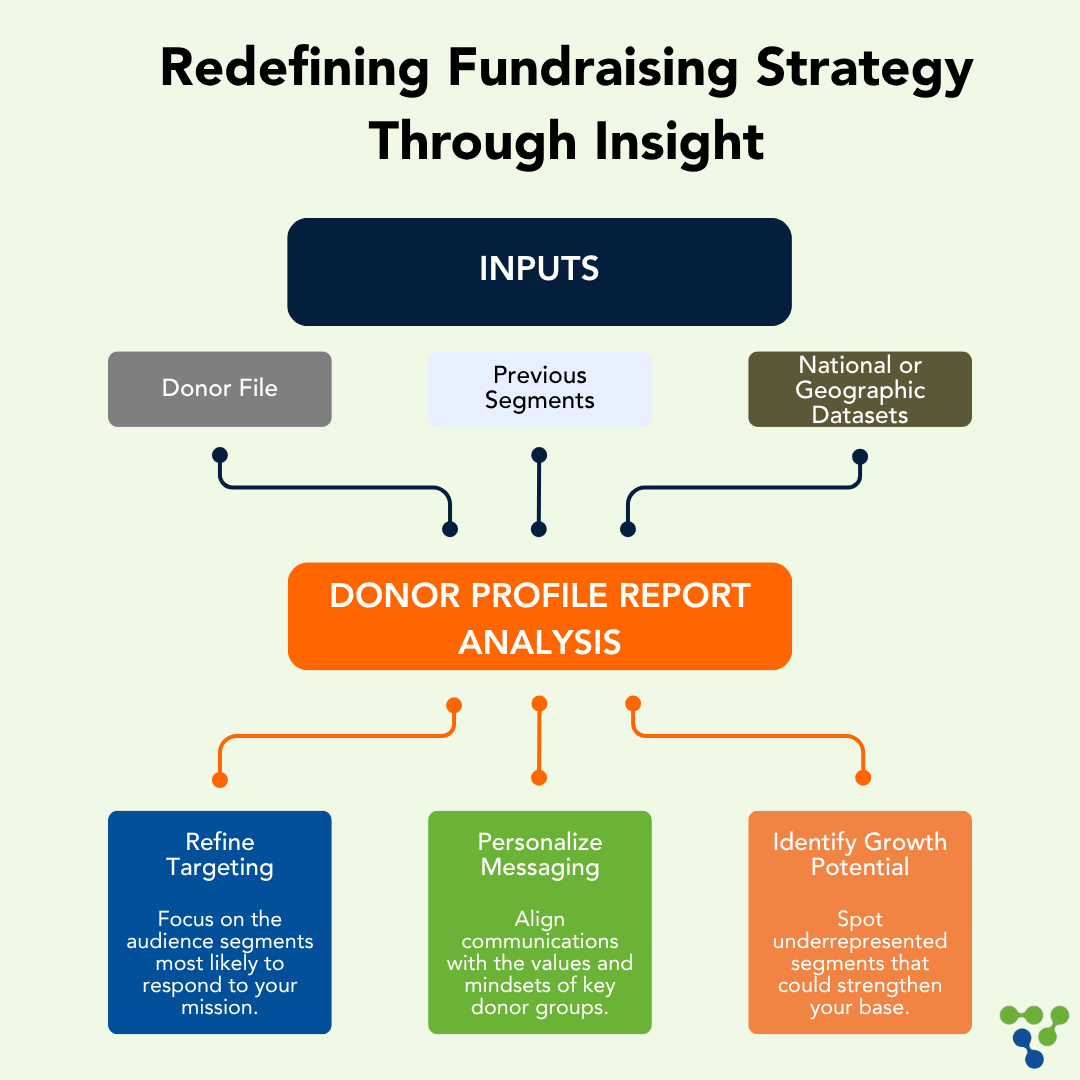
Donor Profile Reports help nonprofits move from reactive to proactive strategy. By discovering meaningful differences between your donors and the broader population, you can:

  • Refine targeting: Focus on the audience segments most likely to respond to your mission.
  • Personalize messaging: Align communications with the values and mindsets of key donor groups.
  • Identify growth potential: Spot underrepresented segments that could strengthen your base.

There are multiple ways to define your populations for analysis—whether through a file of donor names and addresses, criteria for previously supplied segments, or broader national or geographic datasets. No matter the input, the output remains the same: actionable insight that transforms how you measure and pursue success.


A New Year, a New Perspective

As you chart your course for the year ahead, let donor understanding guide your vision. True success isn’t just about the size of your donor base—it’s about the depth of your connection to it. Donor Profile Reports illuminate that connection, offering the clarity needed to build relationships that last and the insight to make every campaign more meaningful.

From Reflection to Resolution: Evaluating Donor Behavior for a Stronger Year Ahead

As one year closes and another begins, nonprofits have a unique opportunity to pause, reflect, and plan ahead. The key to building stronger fundraising strategies lies in understanding your donors—not just who they are, but why they give, what motivates them, and how they connect with your mission. This is where Donor Profile Reports can become invaluable tools to you.


What Are Donor Profile Reports?

A Donor Profile Report provides a detailed picture of your donor base, highlighting both demographic and psychographic characteristics. These reports quantify and compare key donor attributes—such as age, income, lifestyle, and values—against a broader baseline population. By examining both counts and percentages of each attribute within your donor segment and comparing them to the general population, organizations can clearly see what makes their supporters unique.

This comparative lens reveals not only who your donors are but how they differ from others—helping you understand the shared characteristics that drive engagement and generosity.


Turning Donor Data into Action

Donor Profile Reports are more than just data summaries—they’re strategic compasses. They answer essential questions for your organization such as:

  • What motivates our most loyal donors?
  • Are there specific demographics or mindsets that dominate our donor community?
  • Which audiences might we be overlooking in our outreach?

These insights empower nonprofits to move beyond guesswork. For example, if your donor base is heavily composed of individuals with a strong sense of community involvement and environmental concern, you can tailor messaging to emphasize local impact and sustainability. If data shows your donors skew toward certain age groups or income levels, you can align appeals and channels accordingly.


Reflecting on the Past Year

Before setting new goals, it’s essential to assess what worked—and what didn’t—over the past year. Donor Profile Reports make this reflection process grounded in evidence. By analyzing segments of donors—such as first-time givers, recurring donors, or lapsed supporters—you can uncover patterns behind successes and challenges.

Perhaps your new donor acquisition campaign resonated strongly with a specific demographic but underperformed with another. Or maybe a year-end appeal saw exceptional response rates from donors with certain psychographic traits. These findings illuminate the “why” behind campaign performance, enabling more effective decisions moving forward.


Creating Resolutions That Stick

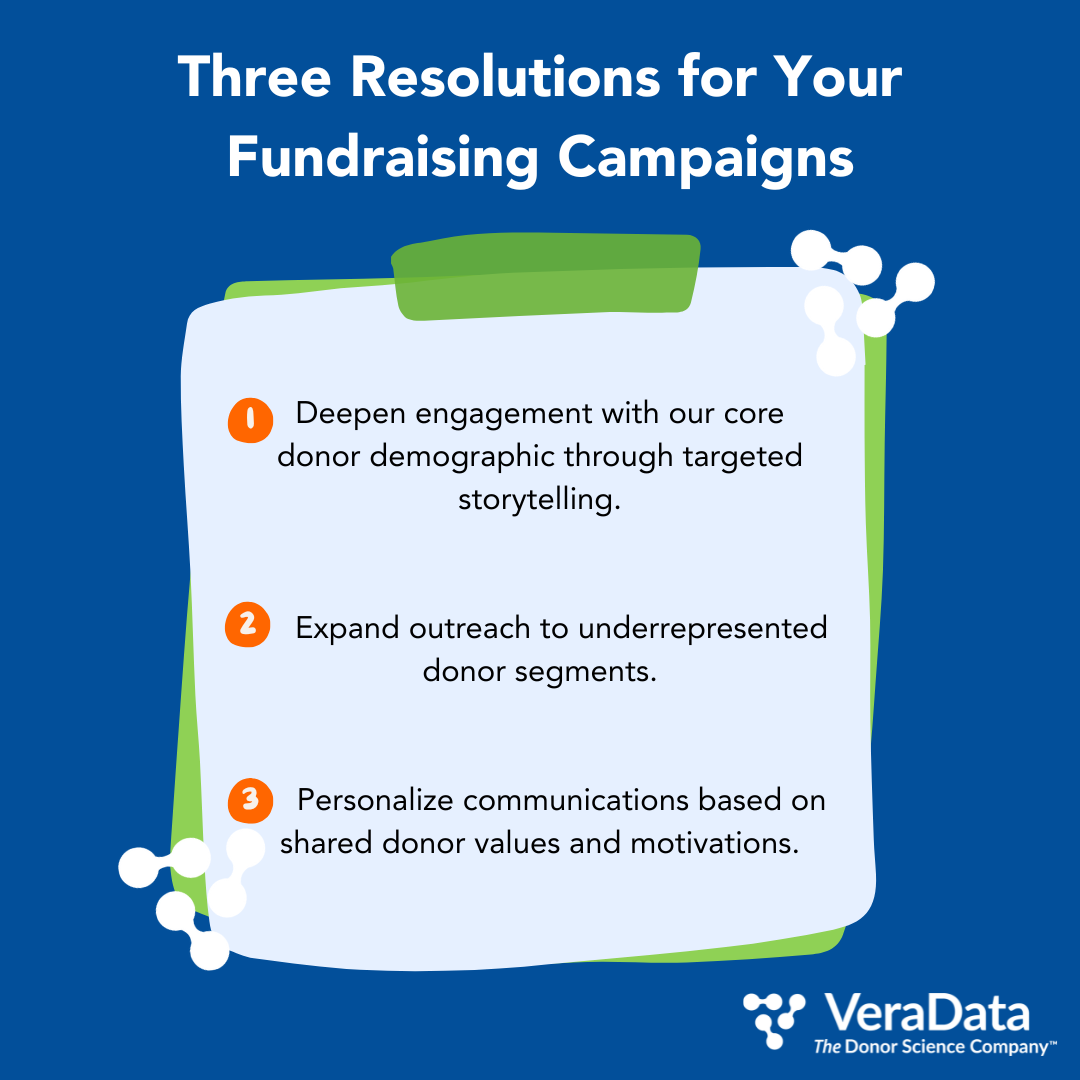
Resolutions often fail when they’re based on assumptions rather than data. By leveraging insights from Donor Profile Reports, nonprofits can set realistic, measurable goals. For instance:

  • Resolution #1: Deepen engagement with our core donor demographic through targeted storytelling.
  • Resolution #2: Expand outreach to underrepresented donor segments identified in our report.
  • Resolution #3: Personalize communications based on shared donor values and motivations.

These data-informed resolutions ensure that each action in the year ahead aligns with what truly drives donor behavior.


Building a Stronger Future

Reflection without action is a missed opportunity. Donor Profile Reports transform data into direction—helping nonprofits understand, connect with, and inspire their donors more effectively. As you move from reflection to resolution, let data-driven insights—not assumptions—be your foundation for a stronger, more strategic year ahead.