
You’re Leaving Major Donor Money on the Table And Your Data Is Why

By Michael Black, VeraData

Remember Robin Leach’s Lifestyles of the Rich and Famous? “Champagne wishes and caviar dreams,” then the camera pans to the clues: the house, the cars, the art on the wall. The whole premise was simple: you can spot wealth if you know what to look for.

Fundraisers don’t get a camera crew. You get a database, a giving history, a few interactions, and a hard deadline to lock your segments before the campaign goes out. And somewhere in that crunch, a donor with real capacity ends up in the same $25 renewal stream they’ve been in for five years, because nobody flagged them in time to change the plan.

That’s a data problem. And it’s more common than anyone wants to admit.

The “Who” Problem Nobody Talks About

Most fundraising teams are good at asking. The struggle isn’t the message or the offer, but rather, it’s knowing who belongs in which conversation.

When major donor and mid-level prospect lists are built on incomplete signals, predictable waste follows. Think about how common these targeting shortcuts are:

Recent giving alone: “top donors this year” becomes the upgrade pool
Loyalty alone: “they’ve given for 20 years, they must be ready”
• Instinct alone: “they came to the gala, I have a good feeling”

None of these signals are wrong. They’re just incomplete. And incomplete lists mean two expensive problems: the donor with real capacity who never gets the right ask, and the donor without capacity who gets months of high-touch outreach that goes nowhere.

According to Giving USA, major gifts (typically defined as gifts of $1,000 or more) account for a disproportionate share of nonprofit revenue, yet most organizations lack systematic ways to identify who in their file can actually make them. The Association of Fundraising Professionals has consistently found that prospect identification and qualification are among the top capacity challenges for development teams of all sizes.

The opportunity cost of misidentifying — or simply missing — high-capacity donors is real. It shows up in staff time spent chasing the wrong people, in revenue that never materializes, and in a file full of donors being asked to give less than they’re capable of.

Wealth Screening Tools Often Fall Short at Scale

Wealth screening tools exist for a reason. If you need to research a specific major gift prospect before a meeting, they’re useful. But fundraising programs don’t run on individual lookups. They run on lists.

Who gets the upgrade package? Who gets a personal call this month? Who gets excluded from the low-dollar renewal? Who moves from mid-level to major gift qualification. Who receives a different message because you’re testing a hypothesis? These decisions are made in batches, and individual lookup tools simply weren’t designed for that.

Raw data append vendors present a different problem. They can give you income indicators, behavioral signals, and demographic attributes, but raw data rarely answers the question a fundraiser actually needs answered: Who should we prioritize, and what should we stop doing? Turning a pile of attributes into a usable segmentation strategy takes analytical time most teams don’t have to spare.

Fundraisers need more data interpretation — a clear, consistent signal that can be applied across a file without requiring a researcher to touch every record.

The Donor Feels It Too

There’s a version of this conversation that stays safely in revenue projections. But the donor experiences it directly.

When someone has the capacity to do more and keeps getting treated like a small-dollar renewal, you’re not just missing revenue, you’re telling them what kind of relationship you’re offering. A donor with real financial resources needs to feel seen rather than flattered, and they need to know that you understand what matters to them. Respect their attention, and be specific about what their gift will do.

A generic renewal ask to a capable donor is a missed conversation. And it cuts the other way, too — pushing high-touch outreach onto someone who doesn’t have the financial room to respond creates awkwardness and disengagement. Neither outcome helps your program.

What Smarter Targeting Actually Looks Like

Better targeting is all about running your programs with intention and knowing which donors belong in which conversation, and building that segmentation in a way that scales.

Imagine appending a single affluence indicator across your entire donor and prospect file — one signal that tells you who belongs in a major gift conversation, who’s a mid-level candidate, and who should never see your low-dollar renewal again. No individual lookups. No patchwork research. Just a consistent, scalable way to segment your file with confidence.

That’s the difference between “we have some wealth data” and “we can run a smarter fundraising system.”

If you had to defend your current major and mid-level targeting logic to a skeptical board member — not your best donor anecdote, but your system — could you? Most teams can defend the intention. Few can defend the method. That gap is why major giving feels harder than it needs to.

VeraData is launching Wealth Index — a new Fundraising Data product that assigns a simple 1–10 affluence score to donor and prospect records, appended in bulk across your file. It’s built by our team of data scientists who use Donor Science to help fundraising teams identify mid-level and major gift candidates at scale, build smarter segments without one-off lookups, and stop routing high-capacity donors into campaigns that don’t match their potential.

Talk Data

Ready to see what Wealth Index can do for your file?

The Average Gift Trap That Lets Outliers Run Your Data Story

By Joey Mechelle Farqué, Head of Content, VeraData

Remember that first stats class in school? Mode, mean, average. Then you’re taught about outliers. The weird numbers that can pull an average around like a magnet.

You pass the course, move on, and unless you’re a self-professed data nerd (hi) or work in data analytics, you forget most of it.

Fast-forward to nonprofit fundraising, where you live and die by dashboards. Those same concepts come back, but now they’re tied to revenue, budgets, and board expectations. And the most common mistake is the same one you made in that stats class: You trust the average before you understand the story behind it.

No worries. As the Donor Science people, we’ve got you.

The First-Read Problem

A national nonprofit organization that helps people connect with the beauty of the outdoors sought a smarter way to select recipients for mailings.

They relied on the tried-and-true selection process that had been in place for ages: recent donors with a minimum gift threshold.

The organization then asked VeraData to run a parallel approach.

We didn’t debate philosophy. We ran a fair test. Same offer, same timing, similar mail quantities. Different selection logic.

Our modeled approach didn’t just “perform well.” The results showed a higher response rate, more gifts, and higher overall revenue.

A Raised Eyebrow

Our model was better and more efficient. And yet, the client team’s initial reaction was skepticism.

Why? Because one number looked “bad” at first glance: average gift.

Our average gift was lower, so the immediate story became: “VeraData’s model found lower-value donors.”

That story was intuitive. It was also wrong.

The goal was to acquire $25+ names. When they saw the results, the first read was “average gift is lower.” But the real story was in the gift bands: VeraData drove more $25+ gifts overall, more $50+ gifts, and more $100+ gifts.

Sacrificing response for average gift is dangerous. Break out the granular detail and let the data guide the way.

We got the organization more of the names they wanted, even with a lower average gift. We also brought in a long tail of sub-$20 gifts that further subsidized the campaign (even if they never touched those donors).

When Outliers Hijack the Average

Average gift is a blunt instrument: total dollars divided by the number of gifts. It’s extremely sensitive to outliers.

Here’s the simplest version:

  • If a segment gets one surprise $3,000 gift, the average jumps.
  • That doesn’t mean the segment “has higher-value donors.”
  • It means the segment got a rare event.

In this campaign, the standard selection segment received a single large outlier gift in a high band that our segment didn’t happen to receive. That one gift inflated their average.

When you remove outliers (a standard way to check whether the average is telling the truth), the picture changes fast: the modeled approach’s advantage becomes clearer, not weaker.

This is the first myth to bust in nonprofit performance reporting:

Myth: A higher average gift means better targeting.

Reality: A higher average gift often means one donor behaved unusually.

The Truth Metric

If you want to know whether targeting worked, you learn to look at the shape of giving, not just a single summary number.

Ask:

  • Did we drive more gifts overall?
  • Did we lift response rate?
  • Did we increase revenue per piece (or per contact)?
  • Did we grow gift counts in meaningful mid-level bands (not just $10-$25)?
  • Does the lift hold when you remove $1,000+ gifts?

In this test, the modeled selection didn’t just “find small gifts.” It produced more gifts, including more gifts at solid everyday levels (think $50+, $100–$250). That’s not a cosmetic win. That’s the base of predictable fundraising.

The VeraData Way

A traditional selection says: “Mail people who gave recently and above $X.”

A VeraData model asks a different question: “Who behaves like people who respond to this kind of appeal?”

Sure, that includes recency and gift history. But, it also includes patterns most rule-based selects ignore:

  • Consistency vs. one-off giving
  • Momentum (are they trending up or down?)
  • Channel behavior (how they’ve responded in the past)
  • Timing patterns (when they tend to give)
  • Signals of affinity and likelihood to act now

Then we score a file so you’re not left guessing.

And here’s what most data vendors won’t say out loud: Modeling is only as good as the discipline around it. Holdouts. Validation. Post-campaign readouts. Learning what broke. Updating what drifted.

That’s why “Donor Science” isn’t branding for us. It’s in our DNA and is a part of everything we do. Donor behavior is signal, and signal deserves rigor.

VeraData has been building and refining machine-learning data engines for fundraising for more than 20 years — back when it wasn’t trendy to call everything “AI.” Over that time, we’ve learned the same lesson repeatedly: models improve when you treat them with continuous validation.

The Bigger Lesson: First-Look Data Rarely Tells The Full Story

Fundraising teams are busy. Everyone wants a quick answer. Dashboards reward speed.

The problem is that “quick” metrics are often the ones most easily fooled:

  • Averages
  • Blended ROAS
  • Single-number “quality” scores
  • Topline revenue without context

A donor file is a population. Populations have distributions. Distributions have outliers. If you ignore that, you can talk yourself out of a better strategy because one headline stat made you flinch.

If you want to pressure-test your current targeting without drama, we’ll help you set up a clean split test and a readout your CFO (and your future self) will trust.

Our job isn’t to make the first-look numbers feel good. Our job is to build predictable fundraising growth from the truth in the donor data.

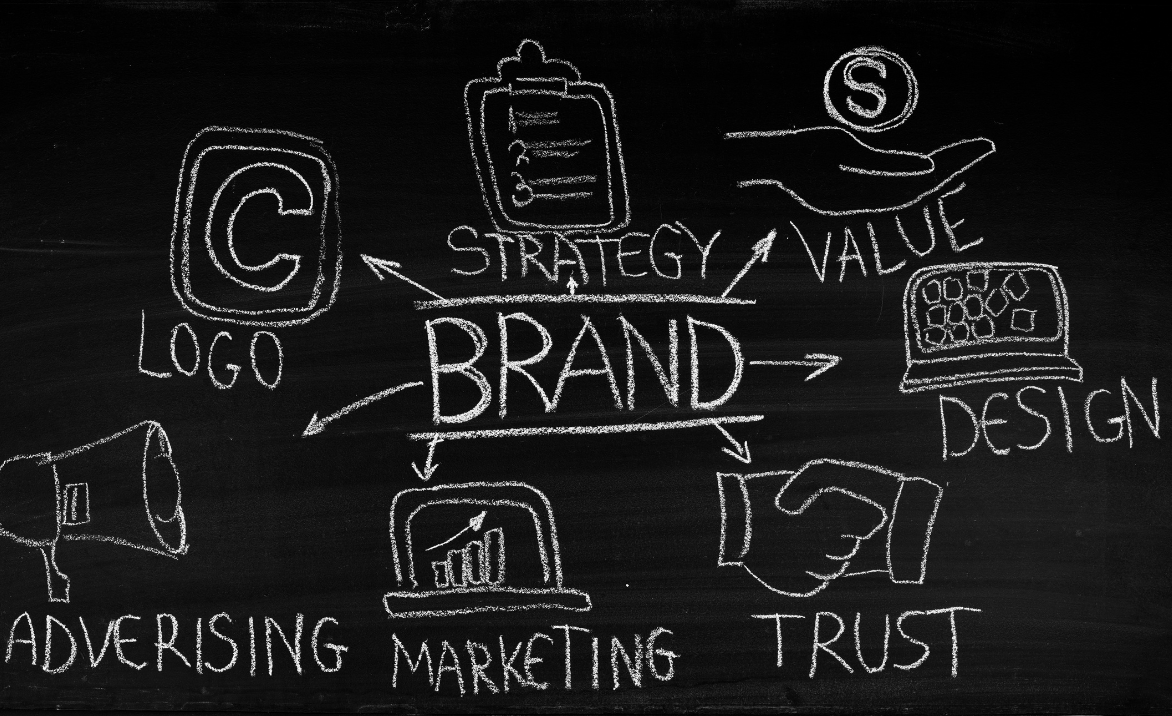
Your Brand Isn’t the Issue, Probably

By Brooke Sconyers, VP Marketing, VeraData

Fundraising runs on donor trust, and trust runs on clarity and proof.

A strong brand helps people recognize you. It can make you feel familiar. It can make your work look competent. It does not automatically remove donor doubt.

Most donors aren’t sitting there thinking about brand architecture. They’re deciding whether the promise in front of them feels real, understandable, believable, and safe enough to fund. The research and data (aka Donor Science) backs that up: donors consistently rank things like accurate appeals, accountability signals, and protection of donor information as top priorities.

So if a campaign looks great but still underperforms, it’s often because the donor experience asks people to take a leap without enough footing.

Trust Friction Tends to Look Boring (and that’s the point)

When trust is strong, donors don’t feel like they’re “being sold.” They feel like they understand what’s happening. When trust is weak, donors hesitate for reasons that are rarely poetic:

  • The ask is hazy, so the donor can’t picture what their gift does.
  • The proof is hard to find, or it reads like marketing copy that never meets the ground.
  • The follow-up is either generic or late, making the organization feel less in control than the story implied.
  • Data privacy feels like an unknown risk.

That last one is not small. Give.org has reported that if a charity a donor supports appears in the news for being hacked and having donor data stolen, 22.5% say they would stop donating, and 51.7% say they would hold off until satisfied the issue is resolved.

Here’s the uncomfortable reality: trust can drop faster from a back-end failure than from any front-end branding problem.
Trust shows up in what donors do next: whether they give again, upgrade, or stay. The metrics don’t care how pretty the campaign was.

Data is How You Keep Your Trust Story from Drifting Into Vibes

Data doesn’t replace brand. It keeps the brand honest.

It helps you answer the questions donors are quietly asking, without turning your appeal into a spreadsheet:

  • What outcomes did you produce last year?
  • What does it cost to do the work, and why?
  • Which programs changed because donors funded them?
  • What happens after I give, and how will you show me?

Research on donor perceptions aligns with this: financial transparency is associated with donor trust, and trust is associated with perceived performance.

That doesn’t mean donors want every line item. It means they respond to signals that the organization is accountable, clear, and not hiding the ball.

Our Creative Science experts at Teal Media believe that design earns attention. Specificity earns belief. Our job is to make the truth feel human without sanding off the details that make it credible.

When a Gorgeous Arts Brand Still Can’t Close the Gift

Arts organizations are a perfect test case because many already have strong aesthetics and a clear identity.

If a year-end appeal relies on broad language — support the arts, sustain excellence, keep culture alive — it may resonate emotionally but still fail to convert, because the donor doesn’t know what their gift will do.

A trust-forward version of an appeal keeps the beauty and adds decision-grade clarity:

  • A donor can fund a defined outcome, such as student matinees, a teaching-artist series, instrument repair, subsidized tickets, access programming, or commissioning new work.
  • Impact is surfaced where it matters: on the landing page, in the mail package, in the receipt, and in the follow-up.
  • The organization tells the truth in plain language about what it costs to run programs well.
  • Stewardship matches the promise: the donor gets a short update tied to what they funded, not a generic newsletter blast.

This is where Donor Science helps the brand story. You can test which outcomes different segments respond to, which messages drive higher second-gift rates, and where the journey drops off — from ad to landing page, landing page to form, form to thank-you, thank-you to retention.

And that testing loop is how you stop guessing. Our Media Science experts at Faircom New York often suggest that, “Donors build confidence through repetition. When the message shifts from an ad to email to landing page, it creates doubt. Consistency reduces friction,” explains Lindsay Marino Long, Vice President, Donor Engagement & Retention at Faircom New York.

Engineering Credibility the VeraData Way

We start with the unglamorous part: data integrity. Traditional attribution and KPI reporting can be distorted when data is inconsistently coded, labeled, segmented, and measured. Donor Science focuses on capturing accurate, complete, timely, and consistent inputs, including granular signals most programs miss, and then standardizing them so the decisions hold up at scale.

Donor Science keeps the story provable and testable by anchoring it in audience behavior, performance data, and the drivers of retention. Creative Science makes the story clear and emotionally accurate without getting lost in the fog. Media Science (Faircom New York) ensures the story shows up in the right places with enough consistency to build familiarity without creating noise.

Stewardship is the proof step, and the part that confirms the organization keeps the promise after the gift. Give.org’s work on donor trust and accountability themes repeatedly underscores how much donors care about honesty in appeals, responsible practice, and the protection of their information.

The appeal is the promise. Stewardship is where donors decide whether to believe you next time.

OK, Sure …

Brand polish helps. It just can’t do the heavy lifting on its own.

Trust is built when your message stays clear, your proof is easy to find, your experience remains consistent across channels, and your organization behaves as if it respects donors — especially with their data.

Case Study: An Audience-First Approach That Transformed Acquisition Results

The Challenge

A national service organization was mailing broadly — and paying for it. Rising costs meant they couldn’t afford to guess who might respond. They needed a smarter, audience-first way to focus their budget on people who were actually likely to join their mission.

What VeraData Did

  • Built a predictive audience model using a $10 minimum gift history to determine which prospects were most likely to respond.
  • Delivered 15,000 ranked names, prioritized from high potential to unlikely to respond.
  • Mailed these audiences in two acquisition drops.

What We Learned (The Audience Story)

Audience-first targeting pays off. The names predicted to respond rose to the top in both mailings, and the lowest-ranked prospects made almost no impact — a clear split between strong and weak audiences.

DonorVision Insight
DonorVision names responded above average, but their gifts were smaller. This signals opportunities to refine donor quality and elevate higher-value prospects.

Cost-Saving Insight
Simply removing low-potential names unlocks real money. Even with the same creative and package, focusing on stronger audiences would have significantly improved results.

Results That Matter

First Mailing:

  • High-potential donors responded more than 4x higher than the lowest group.
  • Audience-first targeting delivered:
    • 18% higher response rate
    • 29% improvement in net revenue performance vs. baseline mailing.

Second Mailing:

  • Stronger prospects again responded far better.
  • Optimization delivered:
    • 11% higher response rate
    • 19% improvement in net revenue performance vs. baseline mailing.

What This Means for Fundraisers

Acquisition works best when it starts with the right people. Focusing on the strongest audiences delivers the biggest gains.

With a thoughtful audience strategy:

  • You waste fewer dollars.
  • You elevate donor quality.
  • You build a stronger file.
  • You get results that feel like a performance upgrade, not a budget increase.

What Comes Next

VeraData’s Donor Science team will:

  • Rebuild the model with a $15 minimum gift level.
  • Build a High Dollar Model for higher-value ask strategies.
  • Continue optimizing by removing the lowest-performing groups.

How Direct Mail, Ai, and Machine Learning are a Powerhouse for Nonprofits

In today’s digital age, it’s easy to assume that traditional marketing methods like direct mail have become obsolete. With the rise of social media, email marketing, and other digital channels, it may seem like direct mail has been left in the dust. However, for nonprofits, direct mail backed by evolutions in technology like Ai and Machine Learning, is leading the way regarding donations. It is proving a valuable tool in their marketing strategy even in a digital-led world. In this blog post, we’ll explore why direct mail leads the charge in a digital world and how nonprofits can use it to their advantage.

The Power of Direct Mail Marketing

Personalization and Tangibility

direct mail for nonprofits

One of the main reasons direct mail is so powerful is its ability to provide a personal touch and tangible experience for recipients. In a world where we are bombarded with digital ads, receiving a physical piece of mail can be a refreshing change. Direct mail allows nonprofits to personalize their message and make a more meaningful connection with their audience. By using the recipient’s name, including handwritten notes, and using eye-catching designs, direct mail can create a sense of personalization.

Additionally, direct mail provides a tactile experience. Recipients can physically hold and interact with the mail piece, making it more memorable and impactful. This is especially important for nonprofits, as they often rely on emotional connections to drive donations and support for their cause.

Targeted and Measurable

Direct mail also offers the advantage of being highly targeted and measurable. Nonprofits can use data and analytics to identify their target audience and tailor their direct mail campaigns accordingly. This allows organizations to reach the right people with the right message, increasing the chances for the desired response.

Furthermore, direct mail is easily trackable, allowing nonprofits to measure the success of their campaigns. By including unique codes or URLs, they can track the number of responses and donations generated from their direct mail efforts. This data can then be used to refine and improve future campaigns, making direct mail a valuable and cost-effective marketing tool.

Direct Mail Marketing Strategies for Nonprofits

Integrating Direct Mail with Digital Marketing

direct mail and digital marketing for nonprofits

While direct mail produces results, it’s important for nonprofits to recognize that it shouldn’t be used as a standalone marketing strategy. Instead, it should be integrated with digital marketing efforts to create a cohesive and effective campaign.

For example, nonprofits can use direct mail to drive traffic to their website or social media pages. By including a QR code or personalized URL, recipients can easily access the nonprofit’s online platforms and learn more about their cause. This increases engagement and allows nonprofits to track the success of their direct mail campaign.

Using Direct Mail for Donor Retention

Direct mail is also an effective tool for donor retention. By sending personalized thank-you notes and updates on how their donations have made an impact, nonprofits can strengthen their relationship with donors and encourage future support. This personal touch can make donors feel appreciated and valued, increasing the likelihood of continued support.

Additionally, direct mail can be used to target lapsed donors and encourage them to re-engage with the nonprofit. By reminding them of the impact they have made in the past and providing updates on the nonprofit’s current initiatives, lapsed donors may be inspired to make a donation once again.

Leveraging Direct Mail for Fundraising

Direct mail is also an effective tool for fundraising for nonprofits. By creating a compelling and emotional appeal, nonprofits can use direct mail to inspire recipients to make a donation. This can be done through storytelling, showcasing the impact of donations, and providing a clear call to action.

Furthermore, direct mail can be used to promote fundraising events and campaigns. By sending out save-the-date cards or invitations, nonprofits can reach a wider audience and increase attendance at their events. This can also be combined with digital marketing efforts, such as creating a Facebook event or promoting the event on social media.

Tips for a Successful Direct Mail Marketing Strategy

Tips for Better Direct Mail Responses

Know Your Audience

The key to a successful direct mail campaign is knowing your audience. Nonprofits should enhance their data and analytics with Ai and Machine Learning to identify their target audience and tailor their message accordingly. Not only can the power of tech identify, but it can also predict and prospect for new opportunities to grow your nonprofit in this data day and age. Paying close attention to personal details like interests, motivations, and communication preferences, Ai and Machine Learning are the keys to donor acquisition and true growth.

Create a Compelling Message

To stand out in a recipient’s mailbox, nonprofits need to create a compelling message that will capture their attention. This can be done through storytelling, using emotional appeals, and showcasing the impact of donations. Nonprofits should also include a clear call to action and make it easy for recipients to make a donation or take the desired action.

Personalize the Experience

As mentioned earlier, personalization is key to the success of direct mail. Nonprofits should use the recipient’s name, include handwritten notes, and tailor the message to their interests and motivations. This personal touch can make a significant impact and increase the chances of a positive response.

Conclusion

While digital marketing may be the go-to for many organizations, direct mail fosters direct actions, especially for nonprofits. Ai and Machine Learning are now the backbones of what was once considered a ‘traditional’ marketing tactic. As physical mail and tech combine, they empower your nonprofit to provide a personal touch, tangible experience, and targeted and measurable results. This all comes together to make direct mail a valuable tool for nonprofits looking to increase engagement, donations, and support for their cause.